
Help! My Dog Hates the Car
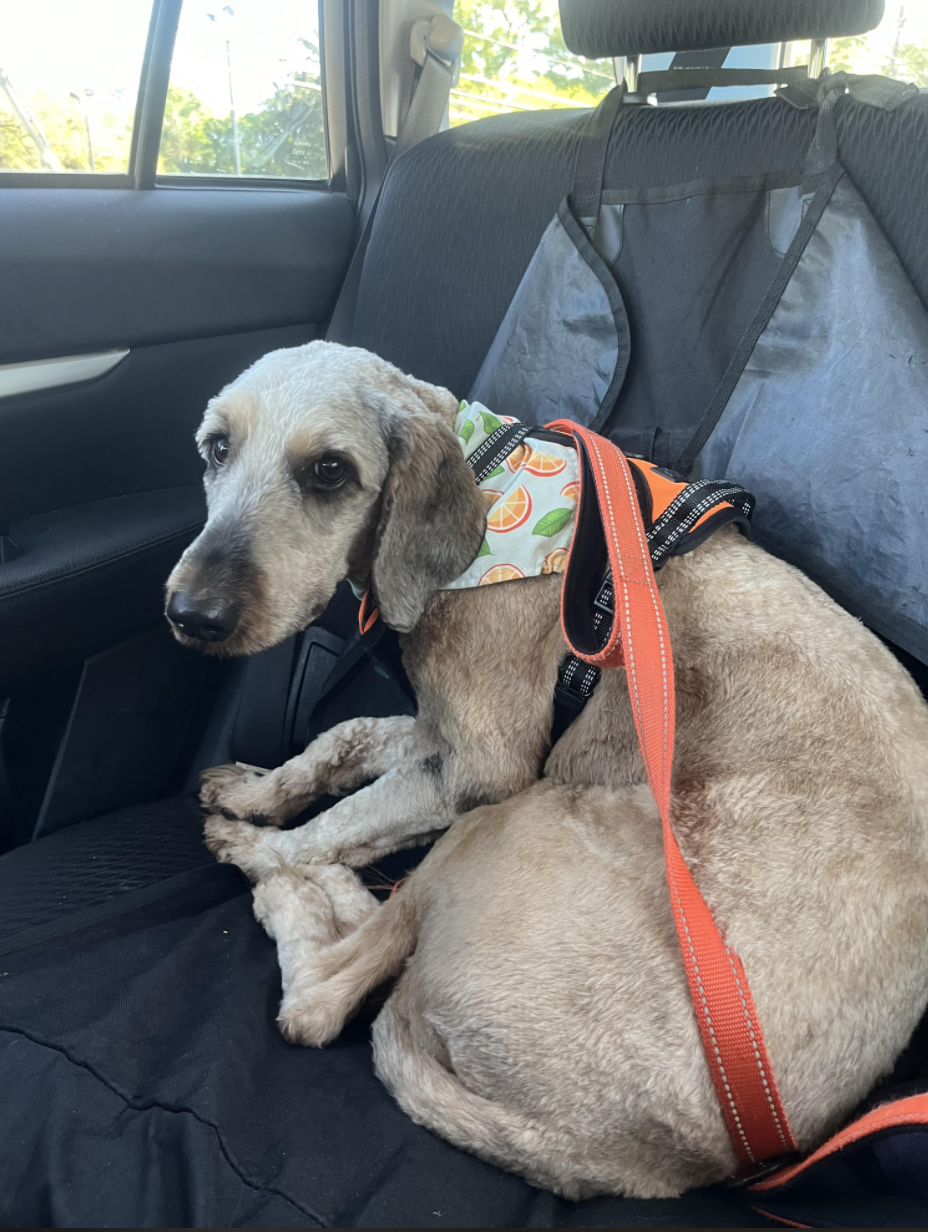
This is a topic close to my heart. My dog has struggled with car journeys for all 4 years of her life. I haven’t been able to eradicate her fear, but I have seen a notable improvement, and I know how to manage it.
From the day we picked her up as an 8 week old puppy, we saw there were issues.
My daughter sat with her on her lap in the back seat as I drove. Skyla (pup) wriggled to get off my daughter’s lap and immediately sought out the footwell of the car. She tried to crawl under the seat in front. I imagine she was trying to find a safe space to hide.
Ever since, she has been reticent to get in the car, won’t take treats in the car, and starts to stress pant if the journey is too long. This is tricky for us as we regularly drive 2 ½ hours down to the south coast from London.
Let me share with you what I have learnt. We tried EVERYTHING. Some things worked, most things didn’t. My advice would be to try all of the below, and if you are still struggling, get in touch with me and we’ll tailor make a programme especially for your dog.
Puppies and cars
Ask your breeder if the puppies have been in the car a few times. And if the journey was for car training, and associated with something positive, or if it was just for a trip to the vet to have jabs. If it’s the latter, the puppies may have associated the journey with something bad.
Puppies tend to get motion sickness more than adult dogs, as their inner ears which control balance, are not fully developed yet. A good breeder will get puppies conditioned to motion before they have to put them in a car. They might swing them gently in their arms, or sit in a hammock/swing with them.
If your breeder hasn’t done any motion training and the pups haven’t been in a car yet, you’d better just cross your fingers!
The best and safest place for a puppy in the car is in a crate. Put a cosy bed in the crate to encourage sleep and cushion any bumps.
Make sure your pup has had some exercise and a pee before getting in.
Most puppies grow out of travel sickness by the time they are one. If they haven’t, it may mean that anxiety is causing the sickness.
A step by step guide to help travel sickness and anxiety
We’re going back to basics. Training starts out of the car. Progress slowly, only moving on to the next stage when your dog is perfectly happy.
1. Play with your dog near the car. Throw really good treats towards the car for her to run and fetch. Running towards the car becomes a positive thing!
2. Only move onto this step when she is happy with the first. Move closer to the car. Keep playing and feeding.
3. Open the door to the car. Keep playing and feeding. Open and close the door a couple of times. Then go back inside the house.
4. Repeat step 3, but now place a treat on the outside edge of the car for her to approach and take. If she approaches even a step, say ‘yes’ and reward (with a treat).
5. Don’t force her in the car. It’s really important she goes in of her own accord, and can immediately out again. Continue to put treats in and around the car. Praise her for any forward movements towards the car.
6. Get in the car and see if she will follow you in. Continue to treat in the car for as long as she wants to stay in it. Door is still open. If your dog is anxious she will not take treats, so you may have to go back a step.
7. Repeat step 6, but now ask someone to get in the driver’s seat and start the engine. Don’t close the door and don’t go anywhere. If she wants to get out, let her.
8. Repeat step 7, but close the door for a short while as you continue to treat. Then get out. We want the car to represent fun. At this stage it shouldn’t necessarily mean you are going somewhere.
9. Increase the length of time you spend with her in the stationary car, with the engine running.
10. Take very short trips.
11. Keep it cool inside to prevent sickness and play soothing music. Open the window a bit so she can smell the outside world (but not jump out the window!).
12. Finally, remove yourself from the back seat, so she is there on her own. Go back a few steps to check she is ok before the engine is on/car moving.
13. If she wants to lie on the back seat, let her. You can buy a dog seat belt to clip her in.
You might want to introduce a crate at the is stage. If putting it in the boot, go back a few steps.
Personally, my dog is happiest in the footwell behind my seat, so I let her stay there, on a cosy bed.
14. Slowly increase the length of your journeys. Any stress panting and you have gone too far. Stop, let her out to decompress for a bit before you continue.
15. Before you leave: Make sure you have exercised your dog before getting in the car, so energy has been released. Don’t feed too close to a journey if your dog has a habit of throwing up in the car. Make sure they have had a chance to toilet before getting in the car.
16. Do use any soothing aides. Dog appeasing pheromone spray, or a few drops of lavender and camomile oil on a cotton wool pad can aid relaxation. Put in car 20 mins before your journey. Last resort, see your vet for medications that might help.
17. Go places your dog enjoys in the car. Parks, new places. Keep some trips short. Don’t just use the car for that dreaded trip to the vet, or to visit your friend hours away.
If you’ve don’t it right, your dog should by now be excited about the prospect of getting in the car for a tasty treat, snuggles, a favourite toy, a trip to the woods.
Remember, your dog is always reading and mirroring your mood, so if you look anxious about the upcoming car journey, so will they. Be light and jolly.
Need any help?