
Stop My Dog Barking at Night
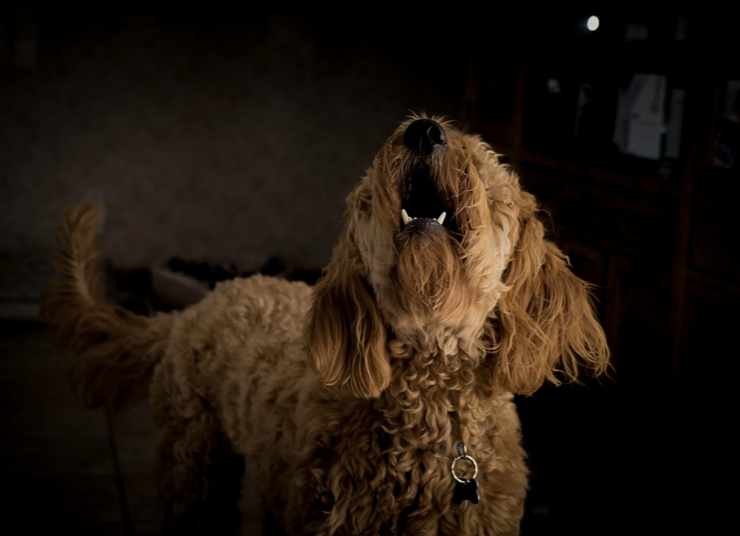
Rather than just dealing with the barking itself, as a regular trainer might, (perhaps by using an anti bark collar- don’t do that!) a behaviourist like myself looks at what is causing the dog to bark. Dogs never bark for no reason, so address the cause, and the symptom of barking will no doubt stop of its own accord.
CAUSES AND SOLUTIONS
Disturbances outside
There may be cats or foxes in the garden, sounds of people walking by, traffic, a distant thunderstorm, other dogs barking etc. Its normal behaviour for your dog to alert bark to the rest of his pack, ‘Possible danger!’ or to make a territorial bark, ‘Keep out!’
Put your dog’s bed in a room that is quiet. One without a window if possible. If your dog sleeps in a crate, cover it in a blanket so sounds are muffled and he can’t see out.
Close the curtains. One of my clients added frosted film to her french doors so the dog was unable to see what was outside even in the day time.
Separation anxiety or Fear
Your dog doesn’t like being alone and is stressed. He may be spooked by a passing shadow or strange noise. Work on getting him used to being comfortable on his own.
Read my blogs on Separation Anxiety and Crate Training to find out how.
Pain/Discomfort
Check the health of your dog if the barking is a new occurrance. Could it be that your dog’s bed is uncomfortable or badly positioned? The dog may be too hot (underfloor heating?) or too cold (sat next to a window?) Could he be hungry or need to pee?
Not tired
If your dog has been asleep all day, or not drained enough energy, he will be more awake at night. He may be barking out of boredom and he may be seeking your attention. Make sure you give him enough physical and mental exercise on a daily basis. For a normal healthy dog I recommend at least 2 walks of 40 mins a day. One in the morning and one in the afternoon, to stop boredom and frustration building. Between walks, play games and get him to use his brain and his nose, sniffing out treats. If he gets enough attention from you during the day time, he won’t need it at night.
New environment
If your dog is in an unfamiliar house or something has changed (building work for example) he may bark out of insecurity. Travel with a cosy bed he is familar with and put something that smells of you in it for comfort. Try and keep bedtime routines the same as normal. Play to drain energy, pee outside, treat on bed.
Cognitive decline
Senior dogs may experience canine cognitive disfunction, which can lead to disorientation, confusion, and anxiety, leading to barking. Sometimes leaving a night light on can dispell any disorientation. Ask your vet if medication can help. You can also try homeopathic remedies or osteopathy for dogs.
Should I let my dog bark it out?
I wouldn’t recommend this unless you KNOW that all your dog’s needs have been met (ie he’s had plenty of exercise, he’s been fed, he’s not scared, he’s had a pee, he has a comfy bed, he’s not sick etc) and he is just barking for attention. In this case, ignoring the barking might make it stop.
But it might not! You could argue that by not addressing the barking, you are allowing it. The act of barking in itself can be reinforcing. If they are practising barking every night, they are getting better and better at it! If the barking continues you could go in to him and say ‘tshh’. Be calm and assertive, as that is the energy dogs follow. Do not yell at him.
But the bottom line is, your dog is trying to communicate something to you. Listen and work to address the cause.