
How to Introduce Your Dog to a New Baby: Safe Steps for Bringing Your Newborn Home
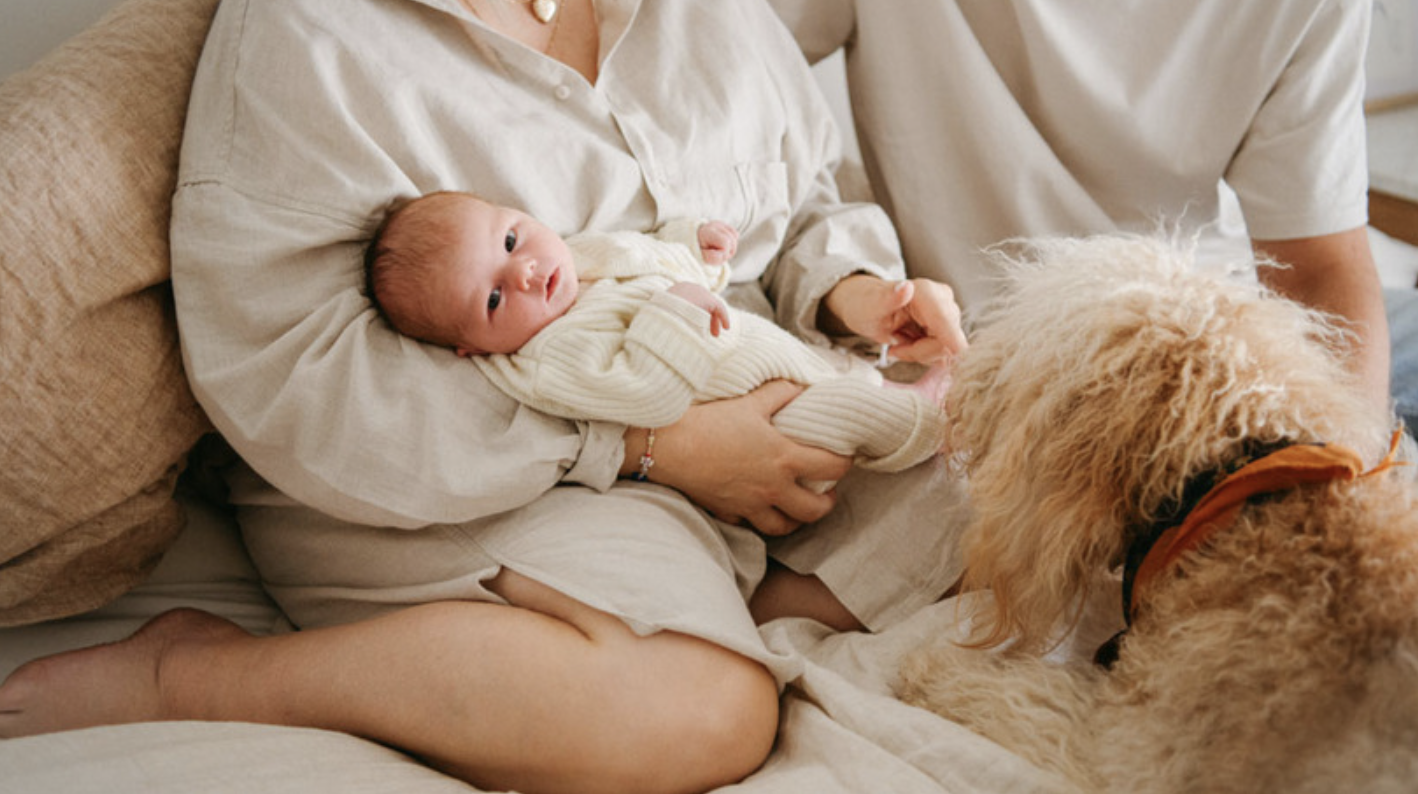
I imagine you are only reading this for one reason, so congratulations!
Bringing a new baby home is a wonderful milestone, but for your dog it can also be a huge change and a challenge. New sounds, smells, routines, equipment and attention patterns can all feel unfamiliar. The safest introductions should not be rushed on the day the baby arrives; they begin weeks beforehand with calm preparation, clear boundaries and steady leadership.
Start Before the Baby Arrives
Your dog will cope better if the biggest changes happen gradually. Before the baby comes home, practise any new routines you expect your dog to follow. Introduce new equipment weeks before bringing baby home- toys, the sleeping basket and baby mat (which the dog is not allowed to go near). You could walk the dog beside an empty stroller to acclimatise him, especially if he is skittish around new or noisy objects. If you imagine being able to spend less time with your dog once the baby arrives, start leaving him for slightly longer periods on his own. If walks will move to a different time, if you want the sofa to become off-limits, or the nursery to have boundaries, introduce these changes early so your dog does not associate them with the baby. You could play the sound of a baby crying and see if your dog is stressed by that. If so, make sure he knows where his safe space is where he can go undisturbed.
A useful rule is: do not wait until you are tired, emotional and holding a newborn to start teaching calm behaviour. Practise “go to bed”, “stay”, “leave it”, loose-lead walking and calm greetings in advance. These simple foundations help your dog understand what is expected when life gets busier.
Use Scent First
Let the dog experience the baby’s scent before meeting the baby directly. If possible, bring home a blanket, muslin or item of clothing that carries the baby’s scent while the baby is still at hospital or away from the dog.
Hold the item yourself and ask your dog to sniff from a respectful distance. The goal is not for the dog to grab, lick or investigate excitedly. The goal is calm interest. If your dog becomes pushy, over-aroused or fixated, calmly create more space and try again later.
Baby = Calm
Exercise First, Then Introduce
Before the first meeting, give your dog an appropriate outlet for energy. A calm walk, some sniffing time or gentle training can help your dog arrive home in a more balanced state. This reflects the idea that dogs are more receptive when their physical and mental needs have been met.
When you arrive home, greet your dog first without the baby in your arms if you can do so safely. This gives your dog a chance to release initial excitement before being introduced to the baby. Wait for softer body language, calmer breathing and better responsiveness before moving to the next step.
Distance Means Respect
The first introduction should be calm, controlled and spacious. Rather than placing the baby close to the dog straight away, start with distance. One adult can hold the baby while another calmly manages the dog on a lead. The dog should not be allowed to rush in, jump up or crowd the baby.
Allow your dog to notice the baby from afar. If your dog remains calm, you may gradually reduce the distance. Keep the session short and end while things are going well. A successful introduction is not measured by how close the dog gets; it is measured by how calm, respectful and responsive the dog remains.
Create Clear Boundaries
Boundaries help dogs feel secure. Decide where your dog is and is not allowed to go, then be consistent. The cot, changing mat, feeding chair and nursery may all need clear rules. Use baby gates, closed doors or a settled “place” cue so your dog has guidance instead of guessing.
Reward the Behaviour You Want
Look for moments when your dog is relaxed around baby-related activity: lying on their bed while the baby cries, walking calmly beside the pram, ignoring a dropped muslin, or settling while you feed the baby. These are the behaviours to quietly reward with praise, food, affection or access to calm family time.
Avoid accidentally rewarding pushy behaviour. If your dog paws, jumps, barks for attention or tries to get between you and the baby, stay calm and guide them to a more appropriate behaviour. The message should be consistent: calm behaviour brings access; over-excitement creates distance.
Watch Your Dog’s Body Language
Many dogs show subtle signs of stress before they react more strongly. Watch for lip licking, yawning, turning away, stiffness, whale eye, pacing, panting when it is not hot, or avoiding the baby. These signs do not mean your dog is “bad”; they mean your dog may need more space, less pressure or professional support.
If your dog has a history of guarding, biting, snapping, intense anxiety, predatory behaviour towards small animals, or difficulty settling, ask a qualified dog behaviourist like myself for tailored support before the baby arrives.
Never Leave Dogs and Babies Unsupervised
Even the most trusted family dog should never be left alone with a baby. Supervision means being awake, present and able to intervene immediately. If you need to leave the room, take the baby with you or calmly separate the dog using a gate, crate, pen or another safe space your dog has been positively introduced to.
The First few weeks
Introducing a new baby to your dog is not a single moment; it is a process. Do not rush access to the baby. It may be weeks before you allow your dog to come close enough to sniff the baby.
Never allow the dog to get excited around the baby. The baby is not a new toy. It is something to be acknowledged calmly.
Holding the baby as you give the dog commands, like asking for a simple ‘sit’ or ‘wait’, can reinforce what the baby represents: a human who should be trusted and respected.
Need any help?