
The Correct Way to Greet a Dog You Don’t Know (And its not what you think)
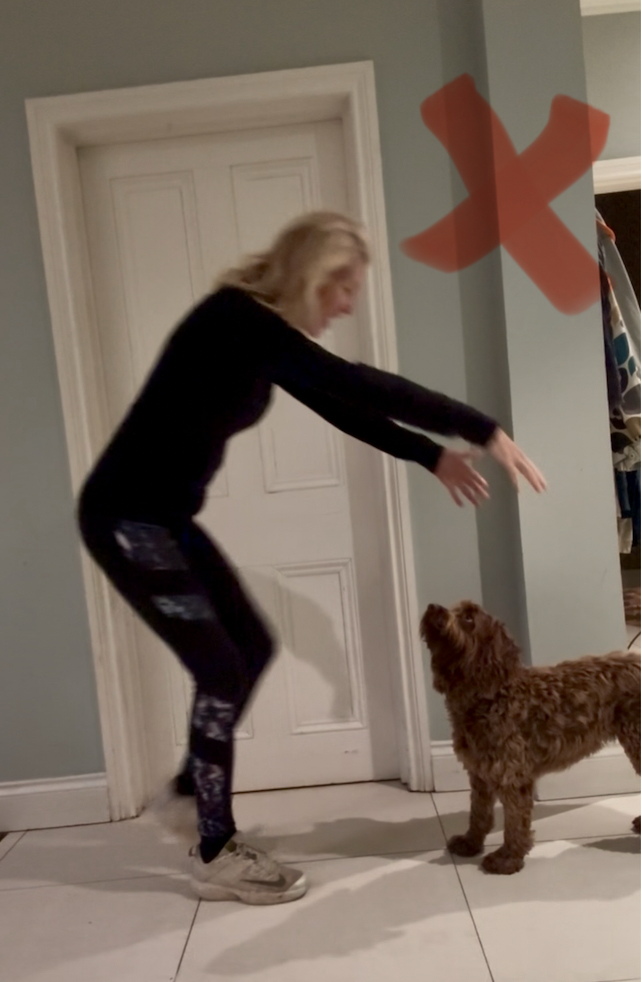
This was the title of an instagram reel I posted some months ago. It went viral. I received around 4.2 million views and 500 comments. Most comments were positive, but some of the viewers were outraged.
I advised that you should ignore the dog. NO TOUCH , NO TALK, NO EYE CONTACT. If the dog is happy to approach you and smell you (while you are ignoring it), only then can you say hello.
Some people misunderstood the reel and thought it was suggesting this was how you should greet your own dog. Others thought that life was too short to ever ignore a dog. In my opinion, they seemed concerned with their own needs, not the dog’s. In truth, the post did err on the side of caution. For those of us who are adept at reading dog body language, you would know if the dog was happy to see you, and safe to approach. The mouth would be open, the body soft, the tail gently swaying, parallel to the ground, the head low, and he might be slowly coming towards you. In this case, of course it would be ok to stretch out an arm towards the dog and say hello with soft words. But if the dog was not willingly approaching you in this fashion, it would be better to follow my advice. I have worked with too many rescue dogs, ex street dogs, nervous and aggressive dogs not to know better.
The RSPCA and other organisations advise to approach a unknown dog with an outstretched hand in a fist (presumably so your fingers aren’t bitten off !) Although this is meant with the best intentions, I am trying to debunk this myth. Imagine a stranger walking directly up to you with their fist in front of your face. Need I say any more? I always want to create FORWARD movement in a dog. I never want a dog to feel they need to back away from me to protect themselves. When I work in dog shelters, many of the dogs are damaged and mistrustful of strangers. I start by entering their kennel sideways, looking away from them. I say nothing. If I feel it is safe to sit down, I will lower myself to the ground and just sit there looking away from them. After a few minutes I simply get up and toss them a treat as I leave. I want to leave them curious about me and wanting more. I then return probably 4 or 5 more times during the day and do the same. By the 5th time, the dog who started by cowering in the corner, is now approaching me. I never move towards them. I wait for them to move towards me. This is how trust is built. NOT by walking toward them with an outstretched arm cooing, “Hellooo, lovely doggy”, because I want to touch them. I have seen too many people who say they are really good with dogs, do exactly this. Even my own confident dog does not appreciate people trying to say hello to her like this.
Meeting a new dog for the first time, do’s and don’ts
DON’T:
Stare at the dog
Walk directly towards the dog with an outstretched arm
Put your hand over or on the dog’s head
Coax the dog with any words
All the above ‘don’ts’ can be read as threatening behaviour. If the dog is anxious or aggressive, they might respond to this approach with a lunge or a bite, or they might back away.
DO
Approach in an arc and not directly towards the dog
Not make direct eye contact
Turn your body side on
Make yourself small indicating you are no threat. You could crouch down sideways (as long as the dog is not aggressive. You don’t want to get bitten in the face.)
Let the dog come up to you and sniff you
If the dog is willing to sniff you and stay by you, that is an invitation that they would like some interaction. (You can then touch under the chin. Stroke upwards from the chest to the chin.)
All the above ‘do’s’ are things that dogs do amongst each other, so it is a language they understand. This is why I urge you to Be More Dog.
Need any help?