
How Much Should I Walk/Exercise My Dog?
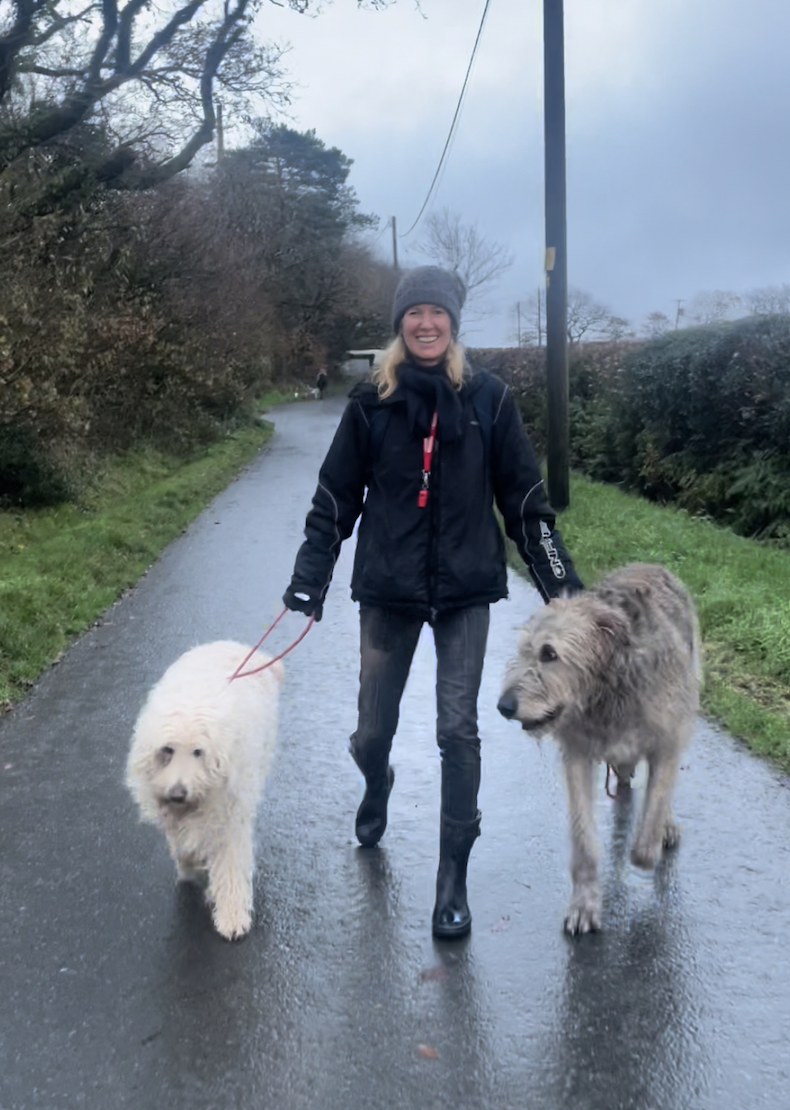
The shor t answer is, “It depends”. Many factors should be taken into consideration, such as your dog’s age, breed, health and mental state. It is important to get this right, as walking a dog too much can lead to weakened joints, aggravation of existing pain, or a dog that doesn’t know how to switch off. Walking a dog too little can lead to weight gain and a frustrated dog who barks all day long and chews up the house.
Signs of too little exercise
destructive behaviour
excessive barking or whining
weight gain
attention seeking behaviour
digging
attempts to escape
restless at night
Signs of too much exercise
limping or stiffness after walks
excessive panting or breathing
reluctance to walk
excessive sleeping
not being able to switch off
worn or cracked paw pads or nails
As a general rule I recommend that a dog is walked twice a day for around 45 minutes each walk. It’s better to do two shorter walks at either end of the day, to stop boredom building, than to do one long one once a day.
Walking is essential for fulfilling your dog’s natural disposision for sniffing and travelling. They were originally migratory animals, so its normal for them to want to keep moving, following a leader. I am not fan of doggy daycare where a bunch of dogs are shoved in a room and left to their own devices with a bunch of toys to fight over. They must be taken OUT and they must WALK and SNIFF and FOLLOW. So my advice if you have to leave your dog for long periods, is to hire a dog walker rather than putting them in ‘kindergarten’.
Having a garden, no matter how big, is no substitution for a walk. Your dog knows your garden too well. It doesn’t offer new smells or encounters that he needs and it means he is ambling around on his own, rather than following and taking direction from his human leader. If you want well behaved dog who responds to your commands, then interaction is key.
Must haves in a walk
The walk should be peppered with on lead and off lead periods. When you are physically connected to your dog (by a lead) you have control and he needs to listen. Its a great time for learning. He also needs some time to run free (unless he is medically unfit) to make his own decisions and build some confidence in himself. If you have a reactive or nervous dog, best to find a safe enclosed space with no surprises. Or put him on a long lead so he can run around, but you still have control. Same goes for a dog with poor recall.
The walk should be interactive. That means not leaving your dog to his own devices for the entire walk while you chat on the phone! Practice some recall. Throw some treats into long grass for him to sniff out. Do some agility- jumping onto tree stumps etc if he is able, or weaving around obstacles.
Allow your dog to sniff. Sniffing is your dog’s superpower and is how he gathers all his information about his surroundings. It also drains energy. If you have limited time for a walk, play some scent games instead.
Vary your routes and the terrain. Mix things up so your dog doesn’t get bored. Be unpredictable- you want your dog to follow you, not to lead you.
Use common sense. If its very hot, shorten your walk or play games instead. Or walk early or late. If your dog is ill or overweight or has breathing issues, slow down and shorten the walk.
This is what I choose to do with my dog:
I have a 4 year old spaniel mix who is healthy mentally and physically. I take her out 3 times a day . Sometimes more, sometimes less. She generally gets around 2-3 hours out of the house every day. These outings may not all be off lead walks in the countryside. One outing might be a trip to the shops or a pavement ‘sniffari’ around the block. Between walks we play games and I teach her something new to drain mental energy and keep her brain function healthy. The important thing is that the dog is getting some form of stimulation, and is not sitting in the same room doing nothing all day. As a result I have a calm, contented dog.
Puppies
Puppies should not go on long walks as it can harm their growing joints. There is an equation I use for how much exercise a puppy should have . Multiply their age in months by 5 and they should get that amount twice a day. So a 4 month old puppy should get 4x5=20 minutes of exercise twice a day.
Breed specific exercise
You can find breed calculators online as a guide to how much each breed needs walking every day. Working breeds will need more (say 2 hours minimum), toy breeds and companion dogs will need less (say 45 minutes).
Hunting and herding breeds, draft/sled dogs (eg collies, malinois, german shepherds, huskies) These are the marathon runners of the dog world, bred to work all day. They have enormous stamina and high drive and need to drain plenty of energy on a daily basis, or they will suffer behaviourally. A bored dog will find its own way to drain energy, such as digging up the garden, chewing the sofa, or barking all day. They will need mental stimulation between walks too, such as puzzle solving, sniffing games, learning a new trick. These breeds would benefit from jogging alongside you running or on a bike. I recommend 3 hours exercise a day.
Sporting and gundog breeds (eg spaniels, labradors, retrievers, vizlas, pointers) These breeds were trained to be out in the field all day alongside their hunting owners. They are enthusisatic and energetic and tend to love water and mud. Swimming and retrieving games are a good way to tire them out. I recommend 2-3 hours exercise a day.
Terrier breeds (eg jack russel, yorkie, staffie, border terrier) These guys are fiesty! Don’t let their size fool you. They have the energy of a dog twice their size. They were bred as ratters and hunters and love to dig. A bored terrier will dig up your garden or ‘kill’ your scatter cushions. Terriers love a game a tug to drain energy (just make sure they know a ‘drop’ command). They also have high prey drive, so you could let them chase a rope at the end of a stick. I recommend 2 hours exercise a day.
Toy and companion breeds (eg bulldogs, chihuahuas, bichon frise, cavalier king charles spaniel, toy poodle, pug) These breeds needs less exercise. In fact it can even be dangerous to overexercise the flat nosed breeds as they have difficulty breathing. Focus more on sniffing games and mental stimulation to drain energy. But they still need gentle walks and to get out and about. I recommend 45 mins exercise a day.
Giant breeds (eg great dane, mastiff, bernese mountain dog, irish wolfhound) Despite their impressive size, these guys need less exercise than you might think. They tend to be slower and less agile, and tire quickly. Over exercise can be bad for their joints which carry more weight than the average dog. They would benefit from steady walks without too much jumping or agility. I recommend an hour’s exercise a day.
Sight hounds (eg lurcher, whippet, greyhound, saluki, deerhound, afghan) These guys need to run at full pelt. Do not get a sight hound if you are not prepared to let it off the lead. After a short spurt of running they will be happy sleeping on your sofa for the rest of the day. I recommend 1.5 hours of exercise a day.
Choose a breed that suits your lifestyle.
It’s no good getting a working breed (eg hunting dogs, protection dogs, herding dogs, scent/detection dogs etc) if you are the sedentary type and are just looking for some companionship. Don’t presume that whatever dog you get will just have to fit in. Research the breed and see how active they are. Then give them what they need.
Time and time again, I see people buying cockerpoos, because they want a cute looking family dog who is intelligent and doesn’t shed. But they have overlooked the fact that they are buying a combination of 2 working breeds (cocker spaniel and poodle) and doing the school run twice a day is simply not enough for these dogs. They need to be worked (mentally as well as physically). It is no wonder then that cockerpoos have been branded ‘a bit mad’ and that they make up the majority of cases I see. Their ‘madness’ completely disappears once they are draining enough energy on walks.
Senior or infirm dogs
Older dogs, or dogs recovering from injury, still need to get out. Even if you drive them to an open space and just sit on a bench with them at your feet, they are still getting new sights and smells. Many older dogs develop arthritis. Its actually good to keep the joints moving so very short gentle walks a few times a day should be encouraged. A short sniffy walk still provides excellent stimulation, without putting pressure on their bodies.
Reactive or nervous dogs
If your dog is triggered by walks, then it may be better not to walk them. They will just be hardwiring that behaviour into their psyches. You don’t want your aggressive dog practising lunging and barking at other dogs over and over again. And you don’t want your nervous rescue dog shying at everything he sees and trying to contimually hide or bolt home. Call a behaviourist to work one to one on that dog’s particular needs. Meantime, let them decompress at home. There are still sniffing games and puzzles and training you can do in the house and garden.
Need any help?